











We are living in a time where artificial intelligence can generate interfaces, components and even complete products from a prompt. But in the midst of this acceleration, a key question arises:
If everything can be built, how do we decide what is worth building?
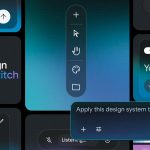
With the new integration between Claude Code and Figma (through Figma MCP), It is now possible to send the rendered state of the browser directly to Figma and convert it into fully editable layers. By simply typing “Send this to Figma”, The code is transformed into a manipulable design.
Figma reinforces a powerful idea: in a world where AI can create almost anything, the real value is in judgment, craft and point of view. The problem is no longer a shortage of ideas. The problem is too many possibilities.
An IDE or a prompt box are great for production. But the canvas is better for exploring and iterating the design.
In Figma you can:
- Compare approaches side by side.
- Divergent thinking.
- See the full picture.
- Adjust details with direct manipulation
- Refine before committing.
And then, when the design is clear, you can take the changes back to the code. This flow breaks with the traditional linear model (brainstorm → design → development). Now you can start at any point: terminal, sketch, prompt or visual UI.
In my opinion AI has a silent side effect: it generates momentum. It is very easy to keep iterating without stopping to wonder if we are really building the right solution. The first working version often ends up being the final version, not because it is the best, but because it already exists.
AI is giving us production superpowers.
But the true senior level in this new stage will not be the one that generates the fastest, but the one that selects the best. In a space of infinite possibilities, design ceases to be just execution and becomes management again. And that, more than ever, is a strategic responsibility of the designer or programmer.