








For several months, I’d been thinking about redesigning my portfolio at luisogando.design. I was in the same boat as many design professionals: day-to-day work takes up almost all my time, and it’s hard to sit down and work with the level of detail, focus, and clarity that I’d like to have at that moment.
Finally, in December 2025, I was able to set aside the time needed to develop the portfolio I had previously designed in Figma, drawing also on sketches and ideas I had been developing over the previous months.
In this article, I share a few points that, based on my experience, I consider key for any design professional who is starting or revamping their portfolio.
Concept and Creativity
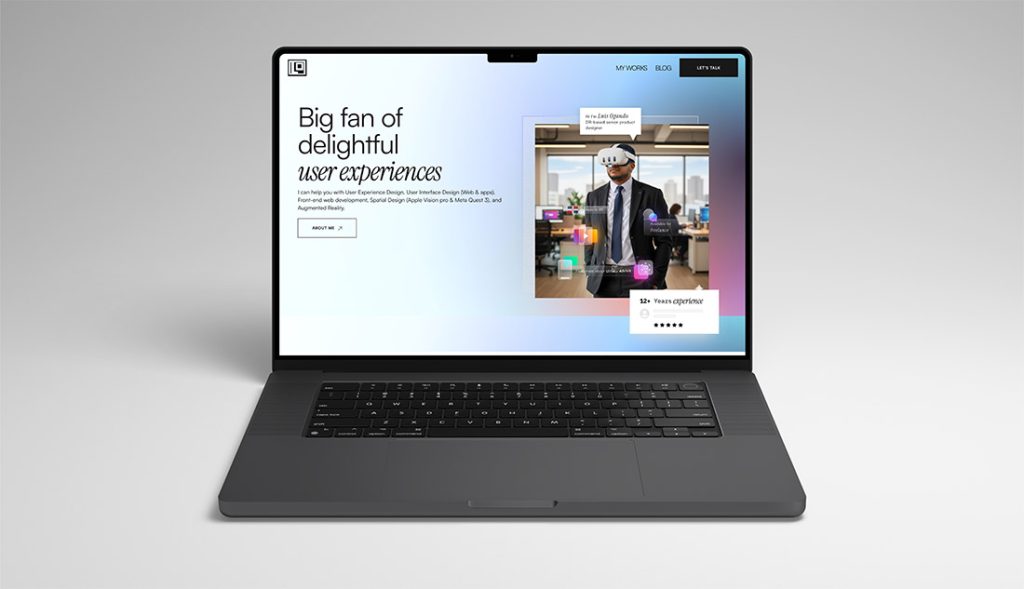
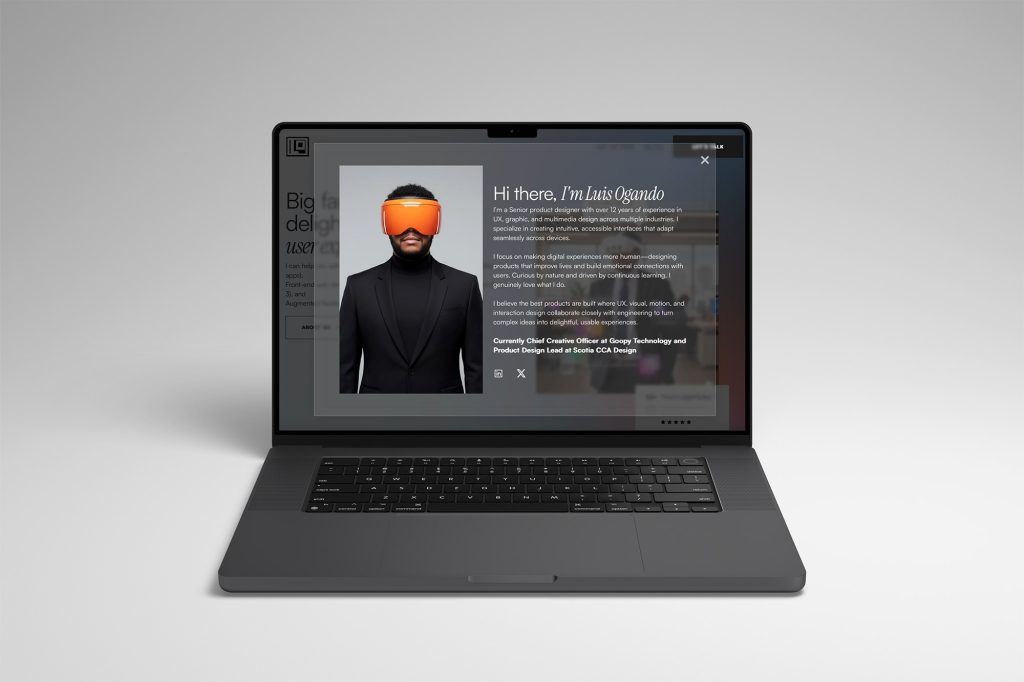
In my case, as a devoted fan of immersive technologies like VR and AR, I wanted the concept of my portfolio to revolve around that universe. Starting with the cover, I sought to create a personal image using the virtual and augmented reality headsets I currently use, thereby integrating my professional identity with the tools that are part of my daily life.
I also felt the need to give it a cleaner, more modern, and more sophisticated facelift compared to my previous portfolio. The goal was to achieve a more mature aesthetic, in line with my evolution as a designer.
My recommendation for anyone putting together a portfolio is to start with what truly represents them on a semiotic level: their tastes, interests, lifestyle, and professional vision. When the concept stems from authenticity, it comes together more quickly, organically, and coherently.
Trends and Visual Language
We are living in an era where styles such as Glassmorphism continue to have a strong presence in visual communication. That is why I decided to incorporate it subtly into some sections of the portfolio—not only to keep it up to date, but also to reinforce a contemporary, tech-driven aesthetic.
As a lover of 3D design, I incorporated three-dimensional elements into the presentation of the project mockups. By combining tools such as After Effects and Cinema 4D, I was able to create transitions and animations that add depth and dynamism, especially when scrolling.
The overall goal was to design a seamless navigation experience, with microinteractions designed to accompany the user's every movement, making the experience visually appealing without sacrificing clarity or usability.
Project Stories
The narrative of a project is undoubtedly one of the most complex aspects of any portfolio. There are many valid structures, and every designer approaches this section differently.
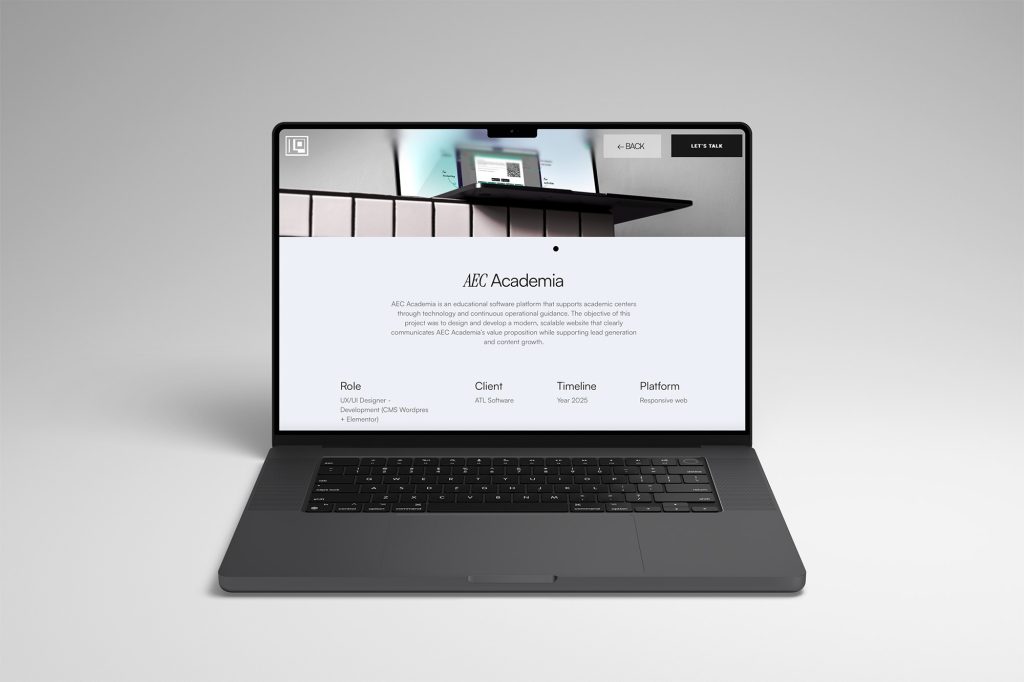
In my case, with more than 10 years of experience working in design and leading or collaborating on numerous projects, I decided not to focus on explaining basic or theoretical design processes. Instead, I prioritized strategic clarity in each case.
I think it's essential to make the following points clear:
• Your role in the project, especially if you were part of a team.
• The project's objective.
• The problem to be solved.
• The proposed solution.
• The final result and its impact.
It's important to be honest and accurate. I've seen many portfolios where the designer takes credit for the entire project when it was actually a collaborative effort. Acknowledging teamwork doesn't diminish your value; on the contrary, it demonstrates professional maturity.
Each project should conclude with a brief summary that connects the problem to the solution and the lessons learned.
Building a portfolio in 2026 is no longer just about showcasing visually appealing work. It’s about demonstrating your judgment, experience, strategic thinking, and professional growth. A good portfolio is an extension of who you are as a designer: how you think, how you solve problems, and how you bring real value to the products and teams you collaborate with.
Beyond following trends or using the latest technologies, what really matters is that your portfolio is authentic, clear, and honest. It should tell real, well-structured stories and make it clear not only what you do, but why you do it and what impact you make.
Ultimately, a well-crafted portfolio isn't just a showcase of projects; it's a living tool that evolves with you and speaks for you when you're not there.