



Without a doubt, smart glasses have been one of the most interesting gadgets I've tried in 2025. Following the launch of the Ray-Ban Meta (Gen 2) in June of this year, a new contender has emerged that deserves special attention: the Quark AI, developed by the Chinese company Alibaba.
At first glance, the Quark AI shows a lot of promise. Its specifications not only compete directly with the Ray-Ban Meta, but even surpass them in some key areas. In terms of design, what has been shown so far points to stylish, lightweight glasses that feel well-built—something essential for the adoption of these types of devices in everyday life.
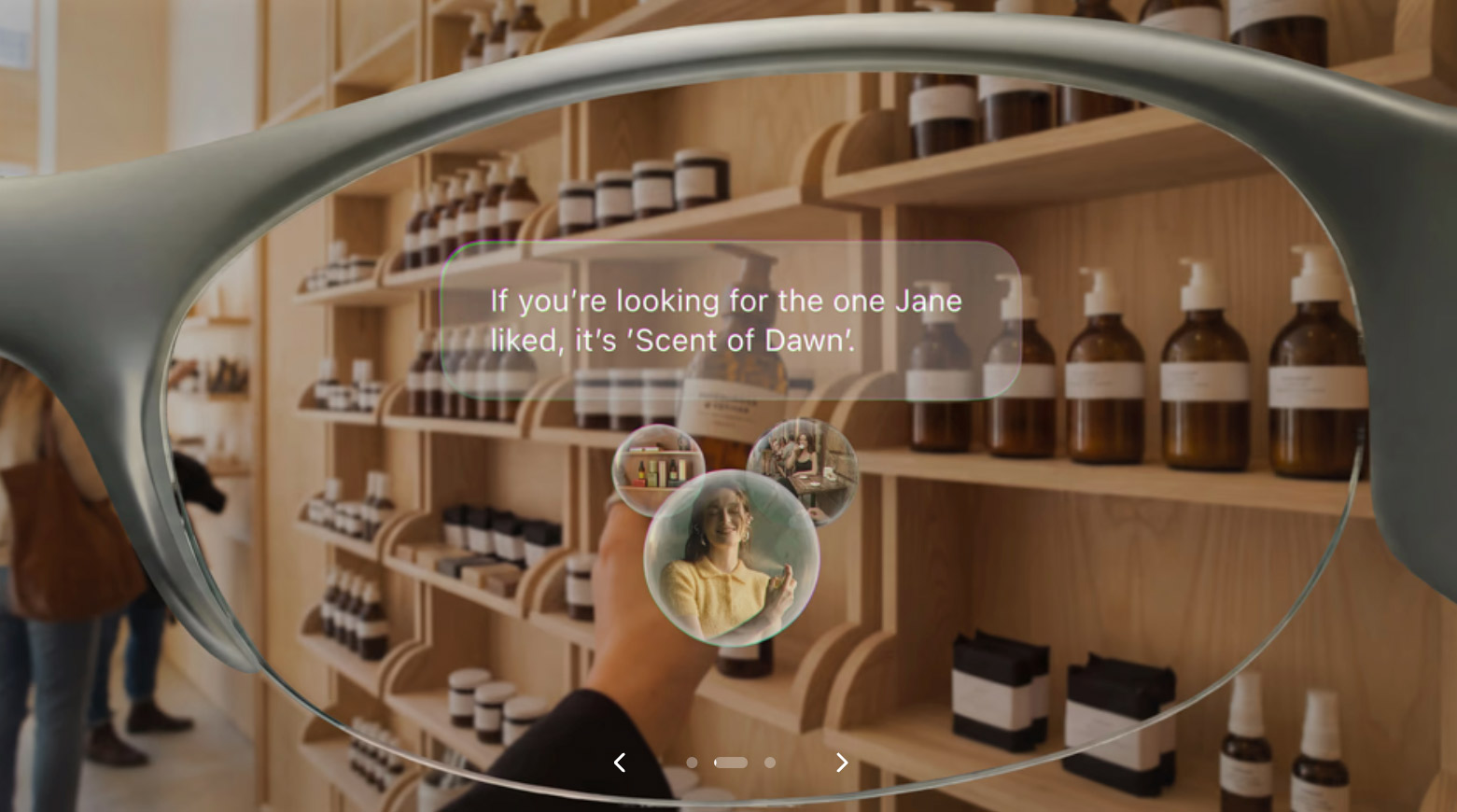
One of the most eye-catching features is its dual micro-OLED display for augmented reality. Unlike Meta, which relies on information projected into a single eye, Quark offers binocular viewing, allowing for a more natural experience, greater depth, and better spatial understanding of contextual information. From a UX perspective, this feature can make a significant difference during prolonged tasks or in more complex use cases.
Another key strength is its deep integration with Alibaba’s proprietary artificial intelligence model, Qwen, which paves the way for more contextual, predictive, and personalized interactions. Added to this is a battery with an estimated life of up to 24 hours—a significant improvement over other devices in its class and a critical factor for the actual user experience.
From a user experience perspective, there’s one particularly interesting detail: integration with Alipay (支付宝). The ability to make payments directly from the glasses isn’t just an eye-catching feature—it’s a clear sign of where wearable computing might be headed: experiences that are increasingly seamless, fast, and aligned with users’ daily routines.
For now, Quark AI is only available in China, but I'm already taking steps to try to get my hands on it so I can do a comprehensive review from the perspectives of UX, product, and real-world adoption.
Beyond the technical specifications, what’s truly interesting about Quark AI is how Alibaba is building a complete ecosystem: hardware, artificial intelligence, payments, and services integrated into a single point of contact. If this vision manages to expand beyond the Chinese market, we could be witnessing a significant shift in how we understand human-AI interaction through wearable devices.
For UX and product designers, these glasses send a clear message: the future lies not only on the screen, but in contextual, persistent interfaces that are deeply integrated into daily life. Quark AI doesn’t seem to be just another gadget, but a serious experiment in what personal computing will look like in the coming years.